Cracked Nipples While Breastfeeding: Causes, Treatment and When to Get Help
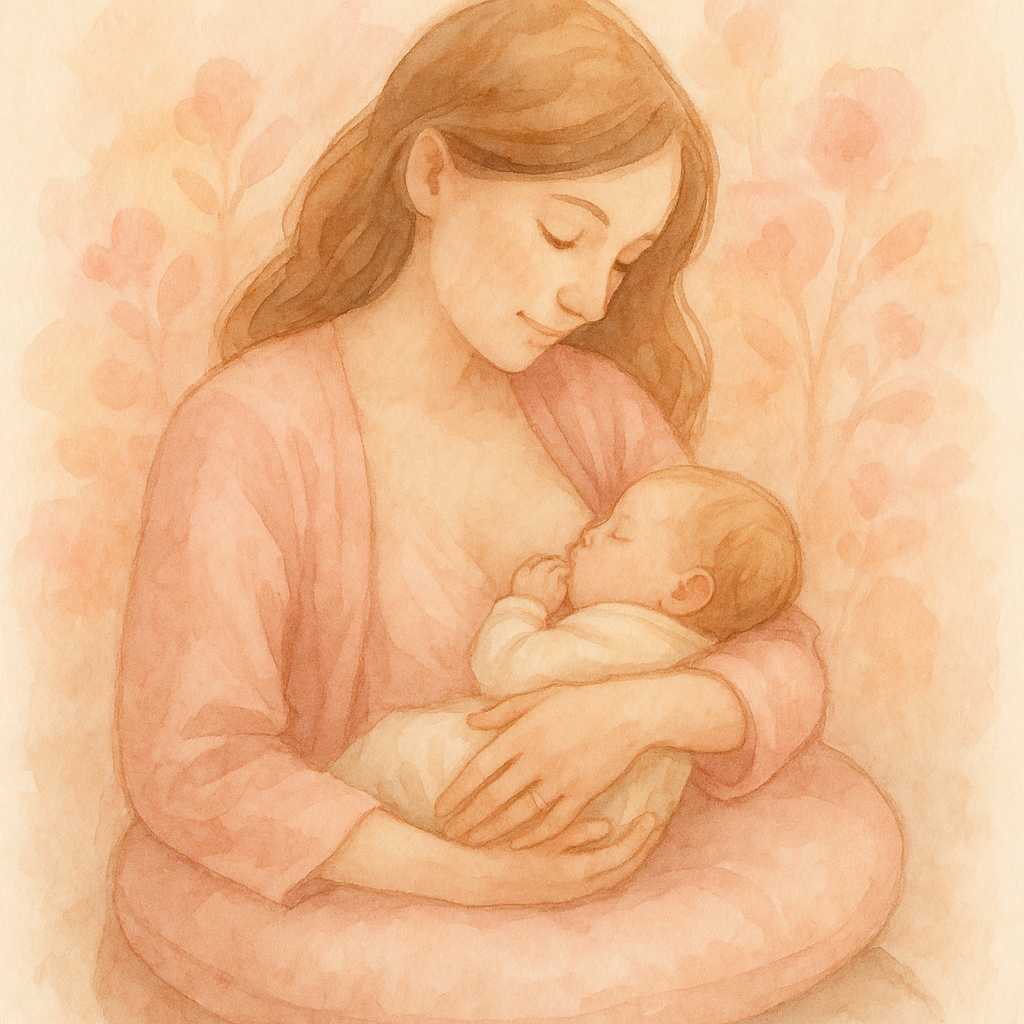
Does breastfeeding hurt, and have you noticed that your nipples are cracked, red or even bleeding? Take a breath, you’re not alone. Cracked nipples are one of the most common problems in the first weeks of breastfeeding, and from my experience as a midwife, I can tell you that in the vast majority of cases they can be fixed.
The problem is that many women go through it in silence, thinking «it’s normal for it to hurt» or «you just have to put up with it.» And no. Breastfeeding does NOT have to hurt. If it hurts, there’s something we can improve. Let’s look at what’s going on and how to fix it 💪
What exactly are cracked nipples?
Cracks are small wounds or fissures that appear on the nipple or areola while breastfeeding. They can range from slight redness to open wounds that bleed. The pain is usually most intense at the start of a feed and eases as your baby nurses.
It’s important for you to know that cracked nipples are NOT an inevitable part of breastfeeding. They’re a sign that something isn’t working, and the sooner we identify it, the sooner we fix it.
Types of cracked nipples by severity
Not all cracks are the same. Knowing where you are will help you understand what kind of care you need and how urgently you should seek professional help.
Grade 1: Redness and tenderness
The skin of the nipple is irritated and red, but there’s no visible wound. The pain appears at the start of the feed and eases after a few seconds. This is the earliest warning sign and the easiest to reverse: correcting the latch at this point prevents it from turning into an open crack.
Grade 2: Superficial fissures
Small lines or fissures appear on the surface of the nipple. The pain is more intense and can last several minutes after the feed. You may see some blood in the milk or in your baby’s diaper, which is alarming to see but not dangerous for your baby (swallowed maternal blood can show up in the stool as dark specks).
Grade 3: Deep, open wounds
The crack is deep, it may bleed during the feed, and the pain is intense throughout. At this stage the risk of infection (candida/thrush or bacterial) increases, and recovery takes longer and needs professional supervision. Don’t let more than 24-48 hours go by without getting help if you’re at this point.
Whatever the grade, the cause is usually the same: a latch that isn’t working. The difference lies in how long it has been happening without being corrected.
Postpartum and breastfeeding
LAI Unstoppable Breastfeeding
Online breastfeeding course by midwife Diana Martínez. Learn from pregnancy how to breastfeed without doubts, without pain and without stress, for as long as you and your baby choose. €97, lifetime access.
See the program →Why do cracked nipples happen? The real causes
After supporting thousands of breastfeeding mothers, I can tell you that the number one cause is always the same:
1. A poor latch
This is responsible in 90% of cases. When your baby doesn’t open their mouth wide, doesn’t take in enough of the areola or sucks only on the nipple, friction builds up and ends up causing the wound. A good latch means your baby’s mouth is wide open, the lower lip is flanged (turned outward) and they take in a good part of the areola, not just the nipple.
How can you tell the latch isn’t right? Check whether:
- Your baby’s cheeks hollow in when sucking (as if drinking through a straw)
- You hear clicking sounds while your baby nurses
- Your nipple comes out flattened or misshapen after the feed
- You feel intense pain throughout the whole feed, not just at the start
2. Tongue-tie (ankyloglossia)
Tongue-tie is more common than people think. When your baby has a frenulum that limits tongue movement, they can’t make the wave-like motion needed to remove milk properly. The result: they compensate with more pressure, and cracks appear.
If you’ve corrected the position a thousand times and you still have cracks, ask for your baby’s frenulum to be assessed. A professional who specializes in breastfeeding can identify it in a few minutes.
3. Incorrect breastfeeding position
It’s not just how your baby latches, but how the two of you are positioned. If your baby is far from the breast, has their neck turned, or you’re leaning forward «offering» the breast instead of bringing your baby toward you, the latch gets harder.
The golden rule: tummy to tummy, nose level with the nipple, and baby comes to the breast (not breast to baby). It sounds simple, but this change makes all the difference.
4. Pacifiers or bottles in the first few days
Sucking on a pacifier or a bottle is completely different from sucking at the breast. When a newborn alternates between them, it can lead to what we call «nipple confusion»: your baby starts closing their mouth the way they would on a bottle nipple, and that doesn’t work at the breast.
5. Candida (thrush) or bacterial infection
Sometimes cracks that won’t heal may be infected, especially with candida (a yeast/fungal infection, also called thrush). If you notice the pain is a stabbing or burning sensation that continues after the feed, or if the nipple looks shiny or pink, see your midwife or doctor.
How to prevent cracked nipples
Most cracked nipples are preventable. Not with creams or prenatal nipple-preparation exercises (which have no evidence behind them), but with information and preparation before birth and during the first hours of breastfeeding.
Before birth: the most effective preparation
- Learn about a correct latch. Watching videos, reading or taking a breastfeeding preparation course before birth gives you a huge advantage. Knowing what a good latch should look like before you’re in the hospital with your newborn makes all the difference.
- Talk to your midwife during pregnancy. If you have inverted or flat nipples, or if you had breastfeeding problems in previous pregnancies, mention it at your prenatal visit. There are specific strategies you can prepare in advance.
- Don’t «toughen up» your nipples. Rubbing, towels and massage before birth don’t prevent cracks and can be counterproductive. Breastfeeding needs a correct latch, not a «toughened» nipple.
In the first hours: the most important ones
- First feed in the delivery room. Skin-to-skin contact and a first feed within the first hour of life help your baby, still very instinctive, latch on well. There’s no rush, but it is important to try.
- Ask for support in the hospital. Many hospital midwives can help you observe and correct the latch from the very first feed. Don’t hesitate to ask for help.
- Breastfeed on demand, with no time limit. In the first few days, your baby needs to nurse often. Limiting feeds or timing them can create frustration and worse latches.
The first days at home: stay alert
Cracked nipples usually appear in the first 7-10 days, when breastfeeding isn’t fully established yet. If every feed hurts from start to finish, something isn’t right. Get help before things get worse; don’t wait until it’s unbearable.
How to heal cracked nipples: what DOES work
1. Fix the latch (this comes first, ALWAYS)
If we don’t fix the cause, it doesn’t matter which cream you use. The cracks will come back. Ask your midwife or an IBCLC lactation consultant to watch a feed and guide you. In my breastfeeding consultation, that’s the first thing we do: watch how your baby nurses and adjust.
2. Apply your own milk to the nipple
Did you know your breast milk has antibacterial and healing properties? After each feed, spread a few drops of your milk over the nipple and let it air-dry. It’s the simplest, cheapest and most effective remedy there is.
3. Moist wound healing with purified lanolin
Pure lanolin (such as Lansinoh or Purelan) helps keep the wound moist, which promotes healing. Apply it after each feed; there’s no need to remove it before the next one. But remember: lanolin doesn’t solve the problem, it only brings relief while you correct the latch.
4. Vary your breastfeeding positions
Changing positions (football hold, side-lying, upright/koala hold…) means the pressure doesn’t always fall on the same part of the nipple. This helps the cracks heal faster.
5. Let your nipples breathe
Whenever you can, leave your nipples uncovered. Constant moisture slows healing. If you use nursing pads, change them often and avoid plastic-backed ones.
What you should NOT do with cracked nipples
- ❌ DON’T use soap or rub your nipples. The areola has its own glands that protect it.
- ❌ DON’T dry your nipples with a hair dryer. Excessive heat dries out the skin and makes the wound worse.
- ❌ DON’T «tough out» the pain thinking it will go away on its own.
- ❌ DON’T stop breastfeeding (except in very extreme cases). Stopping can lead to engorgement or mastitis.
Cracked nipples, mastitis and vasospasm: how to tell them apart
One of the most common mistakes I see in my practice is confusing cracked nipples with other conditions that also cause nipple pain. Telling them apart matters because the treatment is different.
Cracked nipples
- Mechanical pain, mainly at the start of the feed
- A visible wound on the nipple or areola
- No fever (unless there’s an infection)
- The breast is not red or hard
- The pain improves when your baby is well latched
Mastitis
- Fever of 38 °C (100.4 °F) or higher: this is the key sign
- An area of the breast that is red, hot and hard
- Feeling generally unwell, as if you had the flu
- It can appear together with cracks (which were the entry point for the bacteria), but also without them
- It needs a medical assessment: in many cases antibiotics aren’t needed, but it must be evaluated
Nipple vasospasm (Raynaud’s phenomenon)
- Intense nipple pain that appears after the feed, especially with cold or temperature changes
- The nipple turns pale (white), then may turn bluish or red
- There isn’t necessarily a visible wound
- It sometimes coexists with cracks, which makes diagnosis harder
- Treatment includes warming the nipple after the feed and, in severe cases, a medical assessment
If you’re unsure about what you’re experiencing, don’t try to diagnose yourself. A breastfeeding consultation, in person or online, can tell one from the other in minutes and point the treatment in the right direction.
How long do cracked nipples take to heal?
It’s one of the questions I hear most in my practice: «When will it stop hurting?» The answer depends on each case, but I can give you a guideline.
If you correct the latch right away, superficial cracks usually improve in 2-3 days and heal completely in 7-10 days. You’ll notice each feed hurts a little less, until one day you realize it doesn’t hurt anymore.
That said, if the cracks are deep or you’ve had them for weeks, the process may be slower. Some more severe cracks can take 2-3 weeks to close completely. What matters is that you notice gradual improvement. If after a week with a corrected latch you’re the same or worse, you need a professional assessment.
During this time, DON’T stop breastfeeding. Emptying the breast regularly is essential to avoid engorgement or mastitis. If the pain is very intense, you can express milk from the more affected side for 24-48h while that nipple heals, but always under your midwife’s supervision.
And remember: the fact that it takes time to heal doesn’t mean you have to keep suffering. With a correct latch, the pain eases from day one, even if the wound is still visible.
Can I use nipple shields if I have cracked nipples?
Nipple shields are a controversial topic, and for good reason. The short answer is: yes, you can use them, but only as a temporary tool and always with professional supervision.
Silicone nipple shields can relieve pain by creating a barrier between your nipple and your baby’s mouth. With very painful cracks, they can let you keep breastfeeding while the wound heals. But be careful: they are NOT a long-term solution.
The problem is that nipple shields:
- Can reduce milk transfer if they aren’t used correctly
- Can create dependence if your baby gets used to them
- Do NOT solve the cause of the problem (the poor latch)
- Can make weaning off them harder later
My recommendation: if you need nipple shields, use them under the guidance of your midwife or lactation consultant. She will tell you the right size (yes, they come in sizes), how to put them on properly and, above all, how to correct the latch so you can stop using them as soon as possible.
I’ve seen cases where nipple shields saved breastfeeding at critical moments. But I’ve also seen mothers use them for months without needing to, because nobody helped them stop. Use them if necessary, but always with a plan to wean off them.
The emotional impact of cracked nipples: you’re not alone
Cracked nipples aren’t just a physical problem. In my experience as a midwife, I’ve seen how the pain of every feed can become something a mother dreads, and that fear affects the whole breastfeeding experience.
Many women describe the same situation to me: «When I hear my baby crying with hunger, I feel dread thinking about the pain that’s coming.» That’s exhausting, and completely understandable. It’s not that you’re weak. It’s that you’re managing chronic pain while caring for a newborn, probably on very little sleep.
What I want you to know is this: cracked nipples can be fixed. I’ve seen breastfeeding journeys that seemed impossible to continue turn around in 48-72 hours with the right support. A correct latch, a clear differential diagnosis and someone to support you through the process make all the difference.
If you feel you can’t go on, ask for help. You don’t have to reach your limit to deserve professional support.
When should you see a professional?
My recommendation is that you get help any time breastfeeding hurts. But especially if:
- The cracks don’t improve in 3-4 days despite correcting the latch
- You develop a fever or your breast becomes red and hot (it could be mastitis)
- You see pus or signs of infection
- You suspect your baby may have a tongue-tie
In my online breastfeeding consultation I can assess a feed live, check the latch, rule out tongue-tie and give you a personalized plan. You don’t have to go through this alone 🥰
Frequently asked questions about cracked nipples
Is it normal to have cracked nipples while breastfeeding?
No, cracked nipples are NOT normal. They’re common, but not normal. They mean something in the latch or position isn’t working well. Breastfeeding doesn’t have to hurt. If you have cracked nipples, get professional help to correct the cause.
Can I keep breastfeeding if I have cracked nipples?
Yes, in most cases you can and should keep breastfeeding. Stopping can cause engorgement or mastitis. What matters is correcting the latch so the pain gradually eases. If the pain is unbearable, talk to your midwife about temporary options such as expressing milk or supervised use of nipple shields.
What’s the best cream for cracked nipples?
Purified lanolin (Lansinoh, Purelan) is the most recommended option because it’s safe for your baby, doesn’t need to be removed before breastfeeding and keeps the wound moist. But the best «cream» is your own breast milk: it has natural antibacterial and healing properties. Apply it after each feed and let it air-dry.
Can cracked nipples get infected?
Yes, open cracks can become infected, especially with candida (thrush) or bacteria. If you notice stabbing or burning pain that continues after the feed, a shiny, pink or bad-smelling nipple, or if you develop a fever, get help right away. Infections need specific treatment.
How do I know if my baby has a tongue-tie and if that’s causing the cracks?
Tongue-tie (ankyloglossia) stops your baby from sticking their tongue out properly or making the wave-like motion needed to remove milk. If you’ve corrected the latch and position repeatedly but the cracks aren’t improving, ask a specialized professional to assess your baby’s frenulum. In a consultation I can do this assessment in a few minutes.
Can cracked nipples cause mastitis?
Yes. Open cracks create an entry point for bacteria that can cause mastitis. However, mastitis can also appear without any previous cracks (for example, from milk building up because the breast isn’t emptied enough). If you have cracked nipples and develop a high fever with a red, hot breast, get help right away: it may be mastitis that needs an assessment.
Can I use a breast pump if my cracked nipples are very painful?
Yes, temporarily. If the pain is so intense that you can’t let your baby nurse on one side, you can pump milk from that side for 24-48 hours to allow some healing while you correct the latch. Emptying the breast is essential to avoid engorgement or mastitis. Talk to your midwife before deciding to pause feeds on one side: she can advise you on how long and how to do it without compromising your milk supply.
From which week is the risk of cracked nipples lower?
The highest risk is in the first 2-3 weeks, when breastfeeding isn’t fully established yet. From week 4-6 on, if the latch is good, the risk drops considerably. However, cracks can appear at any time if something changes (your baby’s growth, introducing a bottle, etc.). The good news is that a good latch is the best protection against cracked nipples at any stage of breastfeeding.
The good news: cracked nipples heal
With a correct latch, cracked nipples heal in a few days. I’ve seen thousands of mothers go from «I can’t take it anymore» to enjoying breastfeeding within one or two weeks. The key is to ask for help in time.
If you’d like complete preparation for breastfeeding starting in pregnancy, in the MAI Method® we cover everything you need to know so breastfeeding gets off to a good start from the very first moment.
More breastfeeding resources
- 📖 Breastfeeding: The Complete A to Z Guide
- 🍼 The First Days of Breastfeeding: 5 Essential Tips
- 📈 How to Increase Your Breast Milk Supply
- 💊 Breastfeeding and Medications: The Complete Guide
Your next step
LAI Unstoppable Breastfeeding · €97
Online breastfeeding course by midwife Diana Martínez. Learn from pregnancy how to breastfeed without doubts, without pain and without stress, for as long as you and your baby choose. €97, lifetime access.
I want LAI Unstoppable Breastfeeding →This article informs and supports you; it does not replace the care of the professionals looking after you in your pregnancy, birth and postpartum.