Respectful Birth: What It Is, Your Rights and How to Achieve It
What is respectful birth?
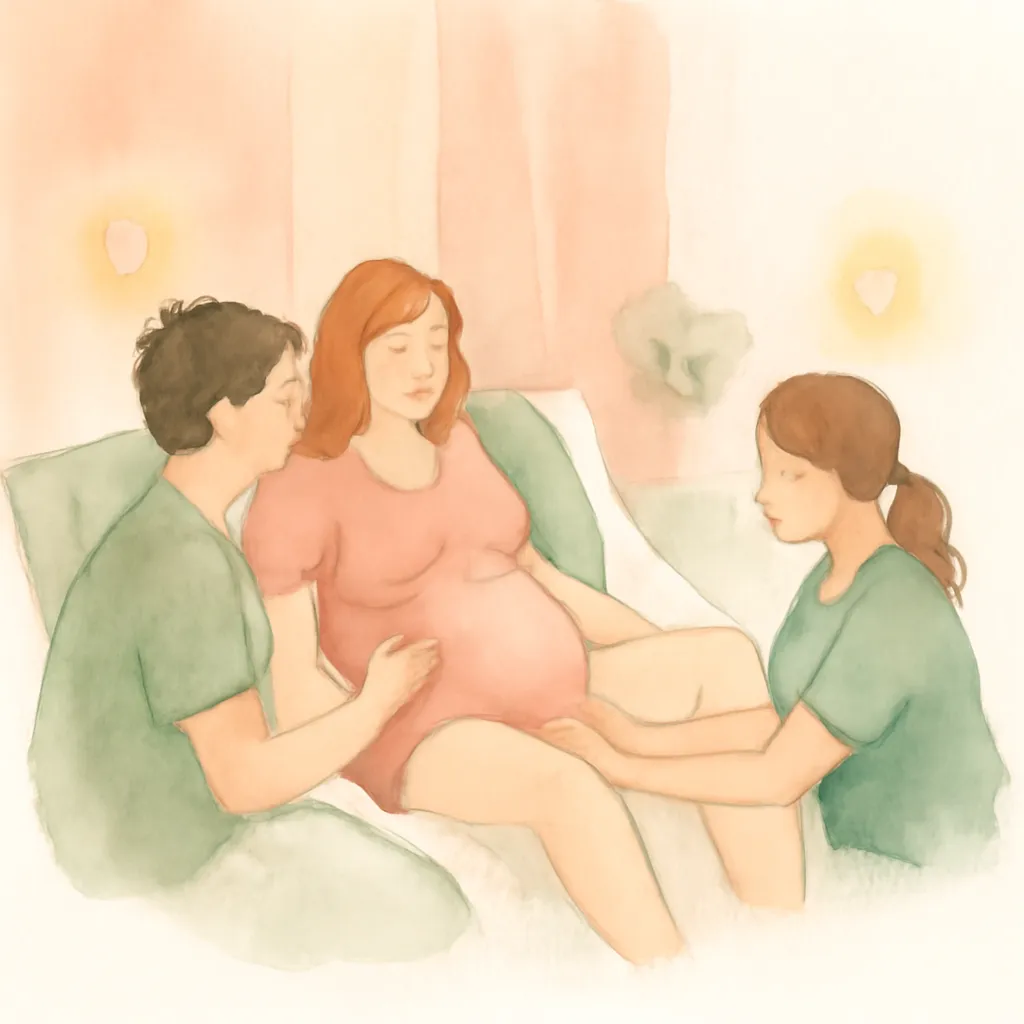
Respectful birth (also called humanized birth) is a birth in which the rights of the mother and baby are respected, unnecessary interventions are avoided, and the physiological process of birth is allowed to unfold naturally when there are no complications.
Respectful birth doesn’t mean rejecting medicine. It means that any intervention is carried out for a justified medical reason, with complete information and with your consent. It means that you are the protagonist of your birth, not a passive patient.
Your rights during birth in Spain
Spanish law recognizes these fundamental rights:
- Informed consent: they must explain any procedure to you before carrying it out
- Birth plan: they are obliged to take it into account
- Support: the right to be accompanied by whoever you choose
- Privacy: birth is an intimate moment that must be protected
- Information: you have the right to know your medical record and the decisions about your care
- Refusing a procedure: you can refuse interventions (except in a life-threatening emergency)
Pregnancy and birth
MAI Method®
MAI Method®: midwife Diana Martínez's complete online preparation for pregnancy, birth and postpartum, in English. 75 video lessons plus MINDMUM® Audios, the LAI breastfeeding course and MAI Safe Baby first aid. €497, lifetime access.
See the program →What practices does a respectful birth include?
During the first stage of labor
- Freedom of movement: walking, using a birth ball or a bath, not being tied to the bed
- Intermittent monitoring: if your pregnancy is low-risk, you don’t need continuous monitoring
- Eating and drinking: current evidence says fasting isn’t necessary in low-risk labors
- A calm environment: dim lighting, music if you like, few people in the room
- No artificial breaking of the waters without a medical reason
- No routine synthetic oxytocin
During the pushing stage
- Free choice of position: lying flat on your back (lithotomy) is NOT the most physiological position
- Spontaneous pushing: pushing when your body tells you to, not when you’re ordered to
- No routine episiotomy: only if strictly necessary
- Protecting the perineum: perineal massage techniques and warm compresses
In the immediate postpartum period
- Immediate skin-to-skin: at least 1-2 uninterrupted hours
- Delayed cord clamping: waiting at least 1-3 minutes (it benefits the baby)
- Early breastfeeding: within the first hour of life
- Not separating mother and baby unless there’s a medical reason
Respectful birth in a cesarean
A respectful birth is also possible with a cesarean:
- A birth partner in the operating room
- Lowering the drape so the mother can see her baby being born
- Immediate skin-to-skin in the operating room (if mother and baby are well)
- Breastfeeding in the recovery room
- Music chosen by the mother
How can I have a respectful birth?
- Get informed: information is power. A good birth preparation course is essential
- Make your birth plan: put your preferences in writing
- Choose your hospital carefully: not all hospitals have the same philosophy. Ask questions and find out
- Find support: your partner or a midwife you trust
- Practice pain management techniques: the MINDMUM® techniques of the MAI Method® prepare you to manage pain and stay calm
The MAI Method and respectful birth
The entire MAI Method is geared toward respectful birth. I don’t prepare you to «endure» labor: I prepare you to be the protagonist, make informed decisions and experience your baby’s birth as the transformative experience it is.
The MINDMUM® techniques (mindfulness + visualization for birth) are exclusive to the MAI Method and give you real tools to manage pain and anxiety and to connect with your body during birth.
Frequently asked questions about respectful birth
Is respectful birth the same as natural birth?
Not exactly. Natural birth means giving birth without medical interventions (no epidural, no oxytocin). A respectful birth can include an epidural if you want one: what matters is that your decisions and your rights are respected.
Can I have a respectful birth in a public hospital?
Yes. More and more public hospitals in Spain have respectful birth protocols. The Spanish National Health System’s Strategy for Normal Birth Care has promoted it since 2007.
What do I do if they don’t respect my birth plan?
In the moment, ask for an explanation and ask for it to be noted in your medical record. Afterwards, you can file a complaint with the hospital’s Patient Care Service or, in Spain, contact associations such as El Parto es Nuestro.
Is a home birth the only way to have a respectful birth?
No. Many hospitals offer excellent conditions for a respectful birth. Home birth is a valid option for low-risk pregnancies, but it isn’t the only path to a respectful birth.
💕 Did you enjoy this? Join our community of mindful moms
Your next step
MAI Method® · €497
MAI Method®: midwife Diana Martínez's complete online preparation for pregnancy, birth and postpartum, in English. 75 video lessons plus MINDMUM® Audios, the LAI breastfeeding course and MAI Safe Baby first aid. €497, lifetime access.
I want MAI Method® →This article informs and supports you; it does not replace the care of the professionals looking after you in your pregnancy, birth and postpartum.