Mastitis While Breastfeeding: Symptoms, Treatment and How to Prevent It
Mastitis almost never gives you a warning. The message I get is nearly always the same: “Diana, I woke up with a patch on my breast that’s red and rock hard, it hurts if anything brushes it, I’ve got chills and I think a fever. Do I have to stop breastfeeding? Should I go to the ER?”
Let me start with the two quick answers, because they’re what you need right now: no, you don’t have to wean (continuing to empty the breast is part of the treatment), and yes, there are specific signs that mean you need to be seen today, and others that allow you to wait 24 hours. Here I’ll explain which are which, what to do at home from this moment on and, very importantly, what not to do, because some of what was recommended years ago is now known to make things worse.
What mastitis is (and why we now talk about a “spectrum”)
For decades, mastitis was explained as a breast infection caused by bacteria getting in through a crack in the nipple. That idea led straight to one approach: antibiotics for everyone.
The current reference clinical protocol changed that framework. In 2022 the Academy of Breastfeeding Medicine published its Clinical Protocol #36: The Mastitis Spectrum (Mitchell KB, Johnson HM, Rodríguez JM et al., Breastfeeding Medicine; PMID 35576513), which reframes the problem: it’s not an isolated episode of infection, but a continuous spectrum of inflammatory conditions of the lactating breast, ranging from engorgement to abscess, in which the underlying process is inflammatory, not necessarily infectious.
The spectrum, from least to most severe:
- Engorgement. Generalized fullness and congestion in both breasts, typical of the first few days.
- Ductal narrowing. Narrowing and swelling (edema) around the ducts due to oversupply or insufficient emptying.
- Inflammatory mastitis. A red, hard, painful area, with feeling generally unwell and often a fever. Without an established bacterial infection.
- Bacterial mastitis. When an infection sets in on top of the above. This is the type that needs antibiotics.
- Abscess. A collection of pus that requires ultrasound-guided drainage.
Why this distinction matters to you: because a significant share of mastitis cases resolve without antibiotics if they’re managed well in the first 24 hours. And because handling the inflammatory phase correctly is exactly what prevents it from progressing to bacterial mastitis and an abscess.
Symptoms: how to recognize it
Mastitis is usually one-sided and comes on quite suddenly, often within a matter of hours.
In your breast
- An area that is red, hot, hardened and painful, often wedge- or triangle-shaped.
- Pain that gets worse when clothing brushes against it and during feeds.
- A feeling of a lump, or an area that is denser than the rest of the breast.
- Sometimes the milk from that breast tastes saltier and your baby refuses that side for a few days. This is temporary and not dangerous for your baby.
In your body
- Fever, often above 38.5 °C (101.3 °F).
- Chills and shivering.
- Muscle aches and feeling generally unwell, very much like the flu.
- Exhaustion out of all proportion.
That “it’s like I suddenly came down with the flu” while you’re breastfeeding is one of the most typical ways it shows up. If it happens, check your breasts before anything else.
Postpartum and breastfeeding
LAI Unstoppable Breastfeeding
Online breastfeeding course by midwife Diana Martínez. Learn from pregnancy how to breastfeed without doubts, without pain and without stress, for as long as you and your baby choose. €97, lifetime access.
See the program →Why it happens
There’s almost always a combination of insufficient emptying and something that inflames or compresses the breast:
- A poor latch, which stops some area of the breast from draining effectively. It’s the most common underlying cause and the most overlooked.
- Feeds that are spaced out or skipped: a long night, going back to work, a trip, starting to wean.
- Mechanical compression: an underwire bra, a poorly adjusted baby carrier, a crossbody bag strap, a seat belt, always sleeping on the same side.
- Oversupply, which keeps the ducts chronically swollen.
- Cracked nipples, which make it easier for bacteria to get in.
- Stress and exhaustion, which interfere with the milk ejection (let-down) reflex and therefore with emptying.
- Heavy breast pump use with the wrong flange size or suction that’s too strong, which traumatizes the tissue.
What to do starting right now
1. Keep breastfeeding from the affected breast
It’s the most counterintuitive step and the most important one. Milk from a breast with mastitis is not dangerous for your baby, and emptying the breast is part of the treatment. Weaning abruptly in the middle of mastitis is the fastest route to an abscess.
Start the feed on the unaffected breast if the pain is very intense (that way your let-down reflex will already be working when you switch), and then offer the affected side.
2. Cold, not heat
Here is the biggest change from what you’ve probably been told. For years, heat before feeds was recommended to “help the milk come out.” Protocol #36 recommends the opposite: cold between feeds, because the underlying problem is inflammatory and heat increases swelling and congestion. Apply cold for 15-20 minutes, with a cloth between the ice and your skin.
3. Anti-inflammatory medication
Ibuprofen is compatible with breastfeeding and targets exactly the underlying mechanism: it reduces inflammation, pain and fever. Paracetamol (acetaminophen) is also compatible and helps with pain and fever. Take it on a regular schedule, not “just to see if it goes away.”
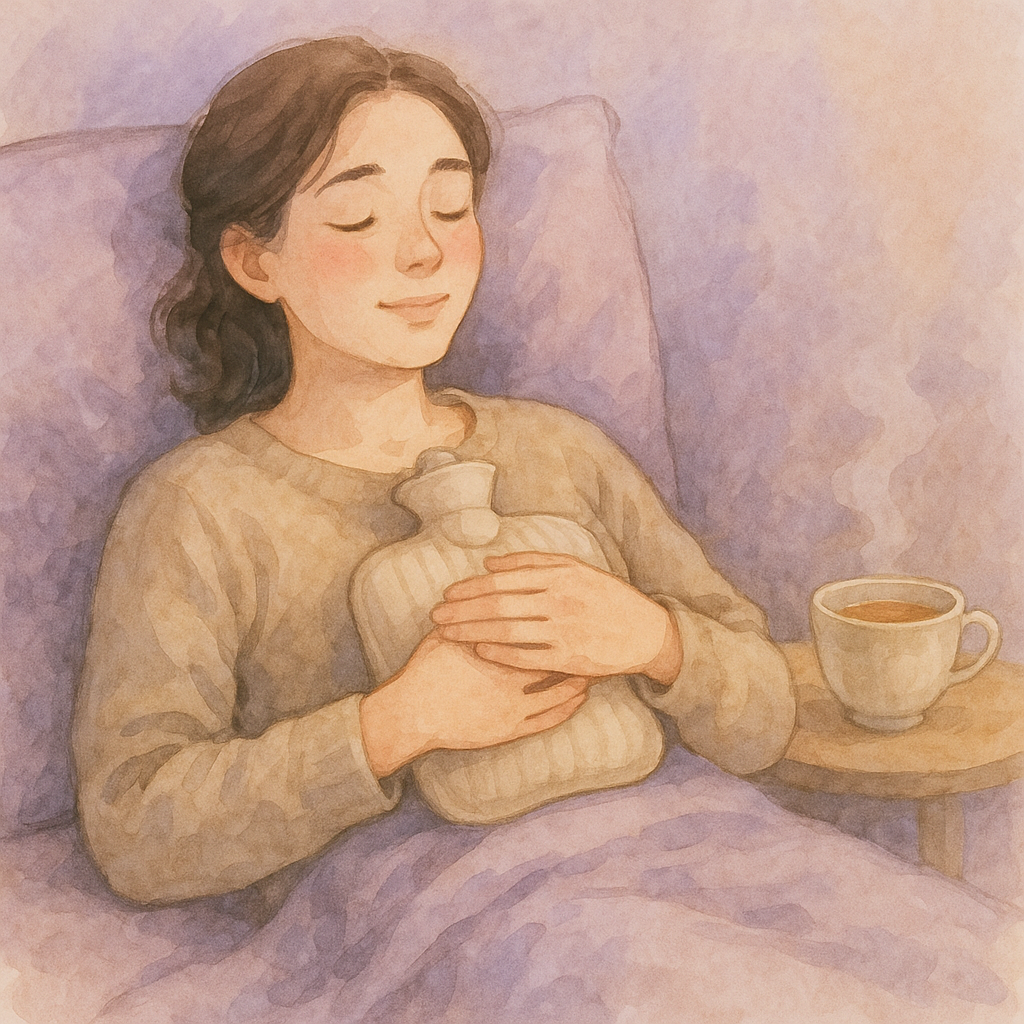
4. Real rest
This is treatment, not a polite suggestion. Bed, fluids, and hand off everything you possibly can for 24-48 hours.
5. Check the latch and remove any compression
If you don’t fix the cause, mastitis comes back. Ditch underwire bras and tight clothing, check how your baby latches on, and change positions between feeds to drain different areas of the breast.
What NOT to do
- Don’t massage the area hard. Aggressive massage, or massage “to break up the lump,” damages the tissue and increases swelling. If anything, use a very light touch from the affected area toward your armpit to encourage lymphatic drainage.
- Don’t apply heat before feeds. It increases inflammation.
- Don’t pump yourself “completely empty.” Over-pumping signals your body to make more milk and worsens exactly what you’re trying to fix. Express only as much as you need for relief if your baby hasn’t emptied the breast.
- Don’t wean abruptly or stop feeding from that breast.
- Don’t stop antibiotics halfway if they’ve been prescribed. Feeling better by day three doesn’t mean the infection is gone.
When are antibiotics needed?
Not always. If your symptoms are mild and it’s been less than 24 hours, conservative management (effective emptying, cold, ibuprofen, rest) resolves many cases.
Get seen the same day if any of these apply:
- You’re not improving after 12-24 hours of well-done conservative management.
- Your symptoms get worse at any point.
- Persistent high fever or you feel seriously unwell.
- There’s a visible crack in your nipple with signs of infection.
- You notice a soft, fluctuating area that feels like it has “fluid inside,” which may mean an abscess.
- Pus is coming out of your nipple.
- It’s your third episode or more: the underlying cause needs to be found, not the treatment repeated.
It’s worth knowing that the evidence base for antibiotics in this situation is weaker than you might expect. The Cochrane review by Jahanfar S, Ng CJ and Teng CL, Antibiotics for mastitis in breastfeeding women (2013; PMID 23450563, DOI 10.1002/14651858.CD005458.pub3), found very few trials, of insufficient quality to conclude whether antibiotic treatment is effective, and pointed to the need for better-quality studies. That doesn’t mean “don’t take antibiotics if they’re prescribed”: it means the decision should be clinical and individualized, and that giving them automatically to every woman with a red breast isn’t justified.
If you are prescribed one, it will almost always be an antibiotic that covers Staphylococcus aureus, for 10-14 days, and it is compatible with continuing to breastfeed.
How to prevent it, especially if you’ve already had it
Prevention follows almost entirely the same path: the breast needs to be emptied well and regularly, and nothing should compress it.
- Check the latch if breastfeeding hurts. Pain is not normal and is usually the first clue.
- Don’t skip feeds abruptly. If you’re going back to work or starting to wean, do it gradually.
- Clothing without compression: a wire-free bra in the right size.
- Vary your positions to drain different areas.
- Take care of cracked nipples as soon as they appear.
- Set up your breast pump properly: the right flange size and moderate suction.
About probiotics, which are widely recommended: the Cochrane review by Crepinsek MA, Taylor EA, Michener K et al., Interventions for preventing mastitis after childbirth (2020; PMID 32987448, DOI 10.1002/14651858.CD007239.pub4), assessed the available preventive strategies and concluded that the certainty of the evidence is low or very low for almost all of them, probiotics included, and that there isn’t enough basis for a firm recommendation. In plain terms: if they work for you, go ahead, but they don’t replace fixing the latch and emptying, which is where the real problem lies.
If you’re on your second or third episode, the conversation is no longer about treating this flare-up: it’s about what’s going wrong at the root. It’s almost always the latch, an unrecognized oversupply, or some compression nobody has looked at.
Sources
- Mitchell KB, Johnson HM, Rodríguez JM, et al. Academy of Breastfeeding Medicine Clinical Protocol #36: The Mastitis Spectrum, Revised 2022. Breastfeeding Medicine, 2022. PMID 35576513
- Jahanfar S, Ng CJ, Teng CL. Antibiotics for mastitis in breastfeeding women. Cochrane Database of Systematic Reviews, 2013. PMID 23450563 · DOI 10.1002/14651858.CD005458.pub3
- Crepinsek MA, Taylor EA, Michener K, et al. Interventions for preventing mastitis after childbirth. Cochrane Database of Systematic Reviews, 2020. PMID 32987448 · DOI 10.1002/14651858.CD007239.pub4
- Gavine A, Shinwell SC, Buchanan P, et al. Support for healthy breastfeeding mothers with healthy term babies. Cochrane Database of Systematic Reviews, 2022. PMID 36282618 · DOI 10.1002/14651858.CD001141.pub6
Keep reading
If your breast is hard but there’s no fever and no localized red area, it’s probably breast engorgement. If there’s pain or there are wounds, look into cracked nipples and pain while breastfeeding. If the episode came with going back to work or with using a breast pump, that’s usually where the cause lies. And if you’re worried your supply has dropped after mastitis, look into galactagogues and the complete breastfeeding guide.
If this is your second or third bout of mastitis, or if you’d like someone to check the latch before there’s a fourth, write to me. You can book a breastfeeding consultation with me and we’ll work on the cause, not the symptom. And if you also have a general question about breastfeeding support, I explain there how it works.
This article is for information only and does not replace an assessment by your midwife, your doctor or your lactation consultant. If you have a persistent high fever, are getting worse, notice a soft fluctuating area or have pus coming out, get seen the same day. Any antibiotic must be prescribed by a healthcare professional.
Your next step
LAI Unstoppable Breastfeeding · €97
Online breastfeeding course by midwife Diana Martínez. Learn from pregnancy how to breastfeed without doubts, without pain and without stress, for as long as you and your baby choose. €97, lifetime access.
I want LAI Unstoppable Breastfeeding →This article informs and supports you; it does not replace the care of the professionals looking after you in your pregnancy, birth and postpartum.